
The Future of 5G: Should We Expect 6G and Beyond? The rollout of 5G has been…
5G and Environmental Impact: What Happens to Birds and Bees?
5G and Environmental Impact: What Happens to Birds and Bees?
The rollout of 5G technology promises faster internet speeds and connectivity that could power smart cities, automated transportation, and an internet of things. However, there is a growing concern about its impact on wildlife, particularly animals that rely on the Earth’s electromagnetic fields to navigate and communicate. Birds, bees, and other pollinators are thought to be especially vulnerable, as they use the Earth’s natural electromagnetic fields as a compass for migration and orientation. This article delves into the research and theories surrounding 5G’s effects on animal behavior, with a focus on migratory birds and pollinators.
How 5G Works and Why It May Affect Wildlife
5G technology operates at higher frequencies than its predecessors, utilizing millimeter waves in the 24 GHz to 100 GHz range. To ensure coverage, 5G networks require a dense network of small cell towers that emit signals constantly. These high-frequency waves have shorter ranges, so antennas must be placed closer together in urban and even rural areas, resulting in a greater proliferation of electromagnetic fields (EMFs) in natural habitats.
Animals, including birds and bees, rely on natural electromagnetic signals from the Earth for various functions. Birds, for instance, navigate using a biological mechanism that can detect subtle magnetic fields. Similarly, bees use electromagnetic fields for orientation, communication, and colony organization. The concern with 5G is that its EMFs may interfere with these natural mechanisms, disrupting crucial biological processes in ways that scientists are only beginning to understand.
Effects on Birds: Disruption of Navigation and Behavior
Studies have shown that some birds, particularly migratory species, are highly sensitive to electromagnetic fields. Birds have magnetoreception, a biological ability to detect Earth’s magnetic field, which allows them to navigate over long distances with remarkable precision. This navigation is thought to be achieved through magnetite-based structures in their brains and a protein called cryptochrome, which responds to magnetic fields. High levels of artificial EMFs may interfere with these mechanisms, confusing the birds or leading them off course during migration.
In 2014, a study conducted by German researchers found that robins exposed to electromagnetic noise were unable to orient themselves correctly. By shielding the birds from EMFs, the researchers were able to restore the birds’ ability to navigate. Although this study didn’t focus on 5G specifically, it provided strong evidence that certain frequencies of EMFs can disrupt avian navigation.
With 5G’s high-frequency, short-wavelength signals flooding urban and rural areas alike, some scientists are concerned that this new network could increase disorientation in migratory birds. During critical migratory seasons, such interference could have deadly consequences, leading to decreased survival rates and disrupted breeding patterns. Since migratory birds contribute significantly to ecological balance, helping control insect populations and contributing to plant pollination, their decline could have ripple effects across ecosystems.
Effects on Bees and Pollinators: Communication and Colony Health
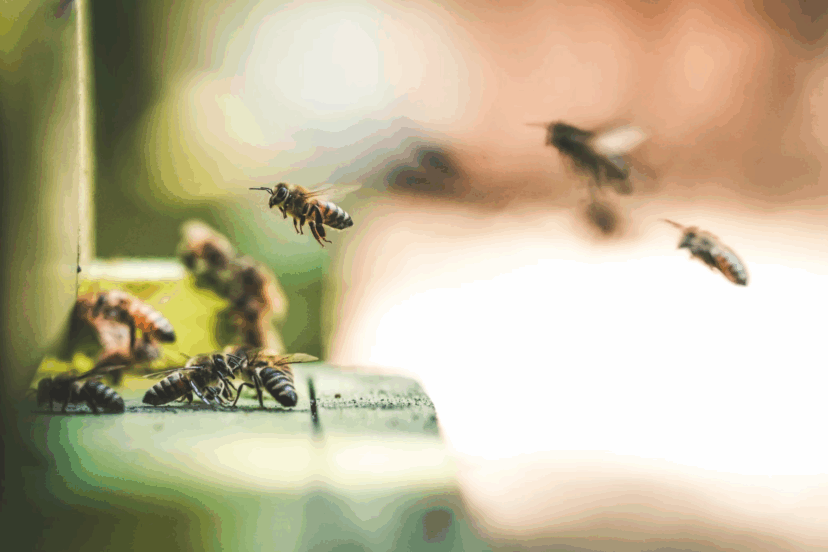
Bees, too, rely on Earth’s electromagnetic fields for various functions, such as communication and navigation. They use these fields to help orient themselves and return to their hives, even across vast distances. A disruption in this orientation process could prevent bees from finding their way back, potentially affecting hive activity and colony health. With bee populations already in decline due to habitat loss, pesticides, and climate change, additional stress from 5G networks could exacerbate the situation.
In 2017, a Swiss researcher published a study in which he exposed honeybees to mobile phone radiation. The bees reacted with symptoms of stress and a significant increase in hive temperature, suggesting that even lower-frequency EMFs can disturb bee behavior. While this study did not test 5G’s millimeter waves, it highlights that even smaller doses of EMFs can alter bee activity. As bees are responsible for pollinating a significant portion of the world’s food crops, any disruption to their behavior could affect food security and biodiversity.
There’s also evidence that bees use vibrational signals to communicate within their colonies. EMFs may interfere with these signals, reducing communication effectiveness and disrupting hive harmony. Studies have shown that bees subjected to electromagnetic exposure display signs of disorientation, which could affect their ability to forage and return to the hive. Without foragers, colonies face an increased risk of collapse, which could have severe consequences for ecosystems and agriculture.
Potential Long-Term Ecological Consequences
Given the essential role that birds and pollinators play in maintaining biodiversity, a decline in their populations could trigger broader ecological consequences. Birds help control pest populations, disperse seeds, and pollinate plants. Similarly, bees and other pollinators are vital to the reproduction of flowering plants, which in turn support entire food webs.
If 5G networks negatively impact these species, the decline in bird and pollinator populations could lead to reduced crop yields and imbalances in natural ecosystems. This domino effect could threaten both food security and biodiversity. Although research is still limited, some scientists warn that our ecosystems may be more fragile than we realize and that we should exercise caution in expanding 5G networks without fully understanding their environmental impact.
The Need for Further Research and Precaution
While some studies have pointed to potential risks, definitive research on 5G’s effects on wildlife is still scarce. Regulatory bodies like the World Health Organization (WHO) and the International Commission on Non-Ionizing Radiation Protection (ICNIRP) currently claim that 5G exposure levels are safe for humans and animals. However, many researchers argue that these guidelines are based on short-term, limited studies and may not account for long-term exposure or ecological impacts.
To gain a clearer understanding, scientists are calling for comprehensive, independent research on the effects of 5G on birds, bees, and other sensitive species. Such studies should investigate the biological mechanisms affected by EMFs and assess the potential for long-term consequences on wildlife and ecosystems. In the meantime, some experts advocate for the adoption of precautionary measures, such as setting up 5G-free zones in nature reserves or rural areas where wildlife is abundant.
5G and Environmental Impact: What Happens to Birds and Bees?
The environmental impacts of 5G remain largely unexplored, yet the preliminary research and theoretical concerns suggest that this technology could have unintended consequences for wildlife, particularly for birds and bees that rely on Earth’s electromagnetic fields. While the promise of high-speed connectivity is appealing, it is essential to balance technological progress with environmental preservation. By investing in further research and implementing precautionary measures where possible, we can work toward a future where both technology and nature can coexist harmoniously.

More to Explore